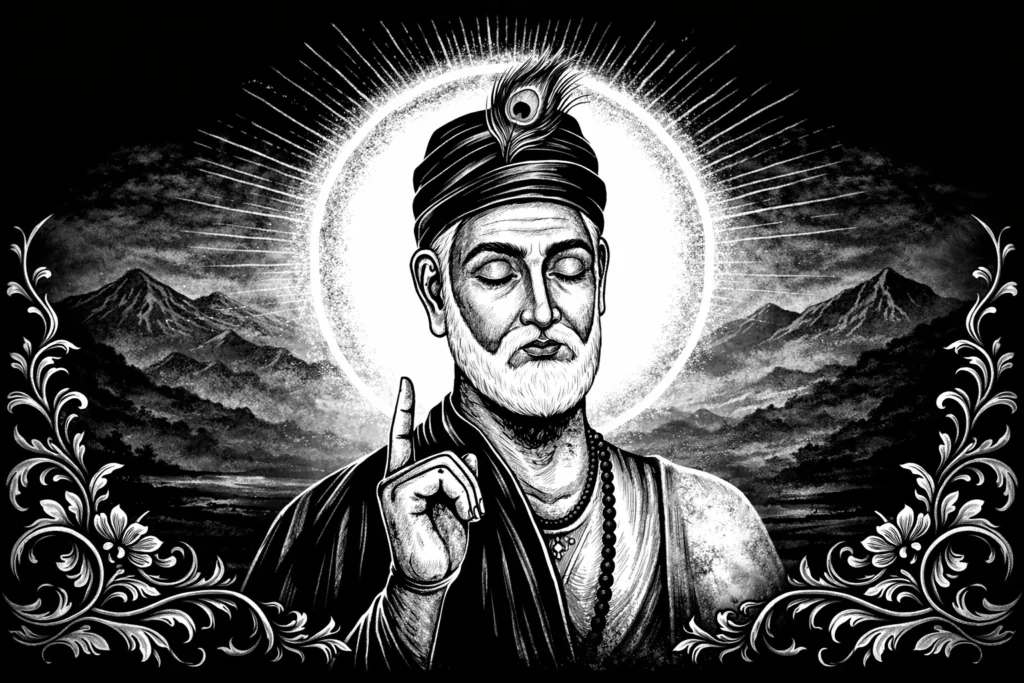
n the fifteenth century, in the narrow lanes of North India, the sound of a loom was often accompanied by words that unsettled scholars and comforted ordinary people at the same time. The man weaving threads and verses together was Kabir. Kabir was not a scholar trained in grand institutions. He was a weaver by profession, but a philosopher in spirit. His couplets, known as dohas, travelled across villages and cities because they spoke in the language of everyday life. Kabir questioned ritual without understanding, pride without humility, and faith without compassion. Many came to hear him, but among the listeners in his modest home was someone who would quietly become part of an enduring lesson about mentorship—his son, Kamal.
To grow up in the house of a thinker like Kabir was to grow up surrounded by seekers. People arrived not for wealth or power, but for clarity. They asked questions about faith, about society, about the nature of truth. Kabir rarely answered in long explanations. Instead, he offered short, piercing lines that forced people to reflect.
One of his most remembered couplets says
“बुरा जो देखन मैं चला, बुरा न मिलिया कोय
जो दिल खोजा आपना, मुझसे बुरा न कोय।”
Kabir was reminding his listeners that wisdom begins with self-reflection. The faults we see in others often hide within ourselves. For a mentor, this insight is powerful. Guidance is not about correcting others constantly; it begins with cultivating humility within oneself.
Kamal grew up hearing such teachings daily. Visitors often treated Kabir with deep reverence. They memorised his verses and carried them to distant towns. It would have been easy for Kamal simply to inherit his father’s role and repeat those teachings without question. Yet folk traditions surrounding Kabir suggest something more interesting about Kamal. He did not merely repeat what he heard. He observed, questioned, and sometimes interpreted the ideas in his own way.
In mentorship, this moment is inevitable. A student who truly listens eventually begins to think independently.
Kabir himself had warned people against blind imitation. One of his dohas gently mocks those who search for wisdom everywhere except within themselves.
“पोथी पढ़ पढ़ जग मुआ, पंडित भया न कोय
ढाई आखर प्रेम का, पढ़े सो पंडित होय।”
Kabir was saying that endless reading and repetition of scriptures cannot produce wisdom if the heart is untouched. True understanding lies in the simple yet difficult practice of compassion and love. For Kamal, growing up under such a teacher meant that the real lesson was not memorisation but awareness.
A piece of folklore often narrated in Kabir traditions illustrates this beautifully. One day, according to the story, a wealthy merchant came to Kabir seeking spiritual guidance. The man spoke about renouncing wealth and asked Kabir how he could become free from worldly attachment. Kabir listened quietly and gave him simple advice: live honestly, help those in need, and remember that wealth is only meaningful when it serves others.
The merchant left satisfied, believing he had received profound spiritual instruction. Kamal, who had been listening nearby, later remarked that many people came searching for complicated wisdom when the truth was often very simple. Some versions of the story suggest that Kamal expressed this idea with a touch of youthful irony. Kabir did not rebuke him harshly. Instead, the moment revealed something deeper about mentorship. The student had begun interpreting the lesson rather than merely absorbing it.
Another folk account portrays Kamal engaging more actively with everyday life than his father. Kabir often emphasised detachment from social status and outward display. Kamal, however, is sometimes described in stories as someone who observed society closely and interacted with people in practical ways. While Kabir spoke about the illusion of worldly recognition, Kamal seemed curious about how people balanced ideals with responsibilities.
These portrayals do not necessarily indicate conflict between father and son. Rather, they illustrate an important truth: when a mentee begins shaping the teaching according to personal experience, the mentor’s influence has already taken root.
Kabir himself frequently reminded people that truth cannot be owned by any individual. Another of his famous lines reflects this spirit of humility.
“साधु ऐसा चाहिए, जैसा सूप सुभाय
सार-सार को गहि रहे, थोथा देई उड़ाय।”
Kabir compared a wise person to a winnowing basket that keeps the grain and lets the chaff fly away. The teaching is subtle but powerful. Wisdom lies in discernment—the ability to retain what is meaningful and discard what is empty.
In a mentor–mentee relationship, this ability becomes essential. A mentee does not adopt every word literally. Instead, they absorb the essence and apply it according to changing circumstances.
For those who have spent decades guiding others—teachers, senior professionals, leaders—this story holds a quiet message. The purpose of mentorship is not to create replicas. It is to pass on a way of thinking.
Kabir offered principles: sincerity, humility, and courage to question empty traditions. Kamal, growing up within that environment, seems to have absorbed those principles while also developing his own way of understanding the world.
Modern mentorship often struggles because expectations become rigid. Some mentors measure success by obedience. They expect the mentee to follow the exact path they themselves followed. Yet wisdom rarely travels in straight lines. Each generation faces new circumstances. Each individual interprets guidance through personal experiences.
Kabir’s teachings themselves argue against rigid imitation. One of his most quoted lines reminds seekers where the real journey lies.
“कस्तूरी कुंडल बसे, मृग ढूंढे वन माहि
ऐसे घट घट राम हैं, दुनिया देखे नाहि।”
Kabir compares the human search for truth to a deer searching for fragrance in the forest, unaware that the scent actually comes from within its own body. The message is clear: truth is not found by copying others but by awakening inner awareness.
For a mentee like Kamal, growing up with such teachings must have meant learning not just what Kabir said but how Kabir thought. And that distinction is the heart of mentorship.
A mentor offers clarity of values. A mentee must transform those values into personal understanding.
In many professional environments today, senior leaders often worry when younger colleagues begin questioning established methods. They interpret disagreement as resistance. Yet thoughtful questioning is often evidence that mentorship has worked. The mentee has gained confidence to think independently.
The Kabir–Kamal tradition gently reminds us that influence does not require uniformity. Kabir’s words travelled far beyond his own household. They reached farmers, artisans, scholars, and saints across generations. Kamal’s presence in the stories surrounding Kabir symbolises something subtle but important. A mentee can respect the mentor deeply and still explore the teachings in a different way.
For those guiding the next generation, this insight offers reassurance. A student who asks questions is not abandoning the mentor’s path. Often, they are walking it more consciously.
Kabir’s loom produced cloth, but his words produced reflection. Kamal grew up within that atmosphere of inquiry. Whether through conversation, observation, or quiet disagreement, the relationship between the two suggests a mature form of mentorship—one where respect and independence coexist.
And perhaps that is why Kabir’s voice continues to resonate centuries later. His teachings were never about rigid doctrines. They were about awakening the courage to see clearly.
When mentors inspire that courage in their mentees, the relationship has already achieved its highest purpose.