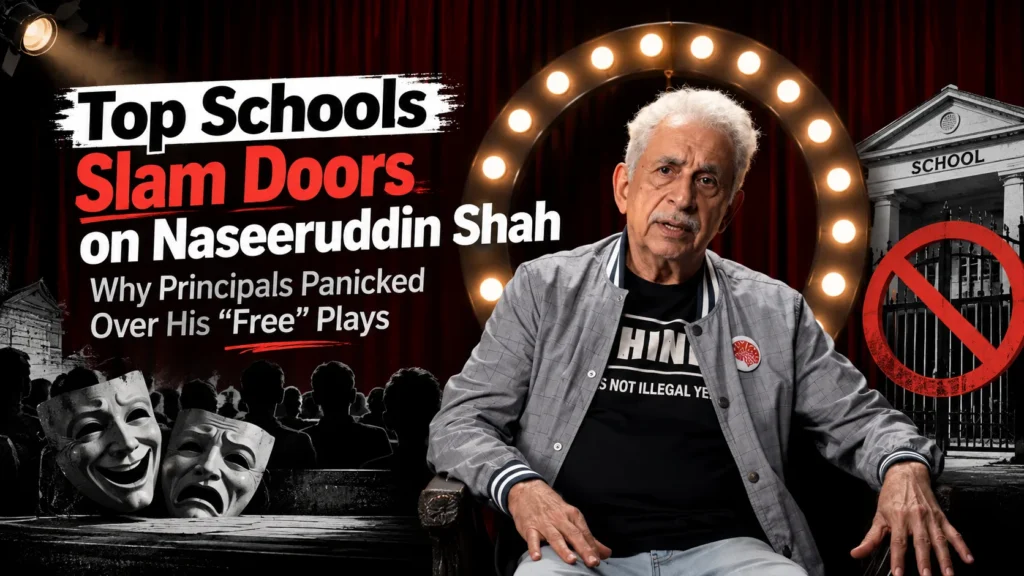
The admission came without any rehearsed PR polish on Prithvi Theatre’s official YouTube channel, during a sit-down interview titled In The Spotlight with Naseeruddin Shah. Prithvi Theatre’s channel has long operated as a digital sanctuary for genuine stagecraft, cataloguing the raw, unedited oral history of Indian theatre practitioners away from the commercial noise of mainstream media. In this nearly half-hour reflection, Shah recounted an attempt to pay forward the defining encounter of his own youth. When he was fourteen years old and struggling through an indifferent school life, the English actor Geoffrey Kendal brought his travelling troupe, Shakespeareana, directly into his school hall. Kendal viewed his work not as high-society entertainment, but as a missionary effort to spread great literature straight to students. Watching Kendal play Shylock live on a bare stage jolted Shah awake, showing him what words could do and setting the trajectory for his entire life.
Decades later, as one of India’s most celebrated actors, Shah decided to replicate Kendal’s mission. He began approaching well-heeled private schools, offering to bring his company, Motley, directly into their own auditoriums to perform plays for students completely free of cost. He asked for no performance fee, no celebrity transport, and no executive guest privileges. He wanted a plain wooden floor and an audience of young minds who might never otherwise experience real, unvarnished theatre.
The response from school leadership was immediate paranoia. Instead of welcoming one of the finest actors in the country, school principals and board trustees were consumed by suspicion. In an educational ecosystem that understands procurement contracts, vendor commissions, software subscriptions, and high-ticket tie-ups, the idea of an artist offering something without an invoice triggered total administrative alarm. Principals could not comprehend why a film star would volunteer his time, assuming there had to be an angle, an unannounced commercial trap, or a clandestine promotional campaign behind the gesture. Administrators told him they would gladly book sofas for him elsewhere, but the moment he insisted on performing inside their school halls for free, a suspicious air crept in.
Shah called this administrative reaction exactly what it is: a sick attitude. The suspicion was so stubborn that over the span of two full years, he managed to take Motley to only three schools. Worse still, despite giving their students a masterclass in living, breathing literature, not a single one of those institutions ever invited him back. The snub was total and permanent.
This is the great hypocrisy at the heart of elite Indian schooling. Institutions charge parents exorbitant tuition, build multi-crore auditoriums, and print glossy brochures promising world-class cultural exposure. Yet those spaces are strictly reserved for sanitised, lip-synced Annual Day pageants designed to pacify paying parents and generate clean footage for promotional brochures. Real art terrifies modern school gatekeepers because it cannot be packaged into a syllabus or monitored like a business asset. By locking out Naseeruddin Shah out of bureaucratic insecurity, the schools did not harm a veteran actor whose legacy is already carved in stone. The true loss fell entirely on the students sitting inside those classrooms, robbed of the chance to see a living master ignite their imaginations because their principals could not trust an offer that carried no invoice.