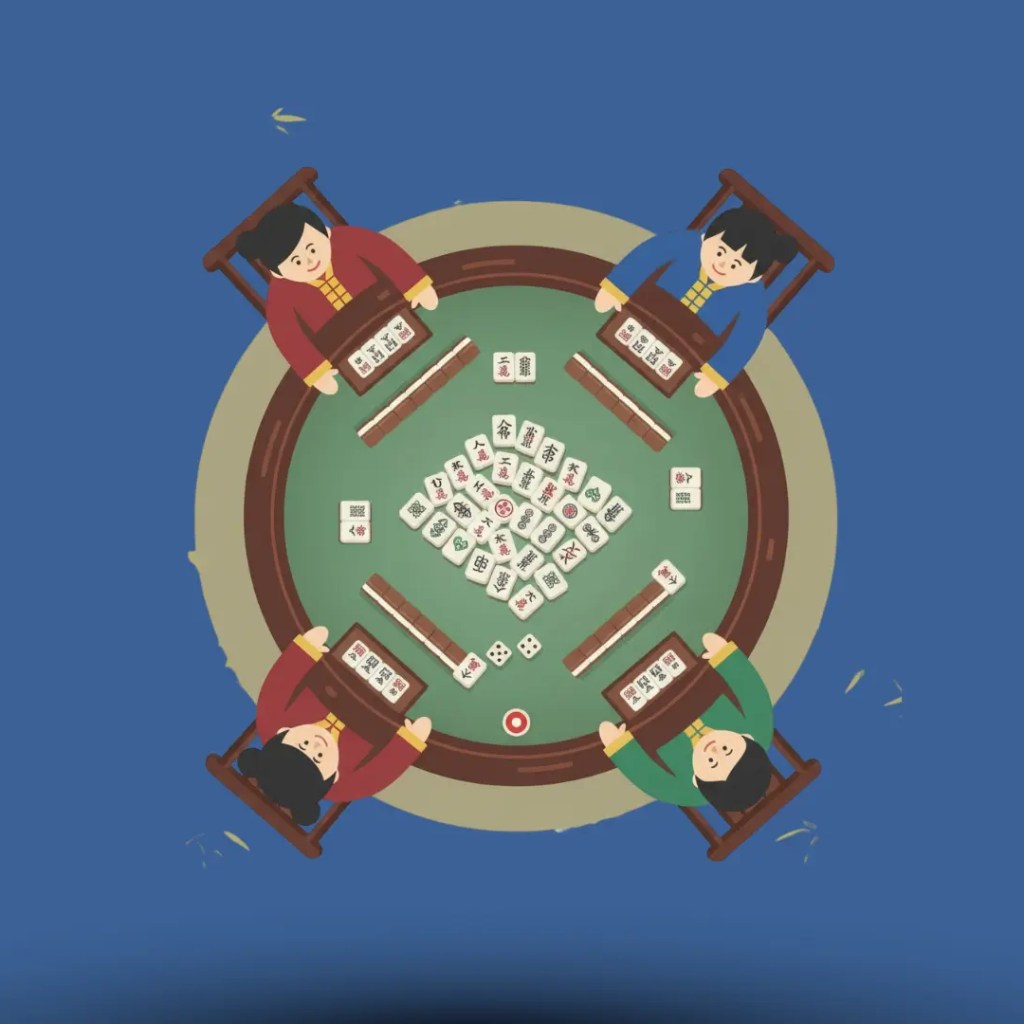
What if a single game could sharpen math skills, improve strategic thinking, and teach patience all at once? While originating in 19th-century China, the classic tile-based game of Mahjong holds immense, untapped potential for modern Indian classrooms. Mahjong is a four-player game of skill, strategy, and calculation—the goal is simple: be the first to form a winning hand of 14 tiles, consisting of four sets and a pair. This blog will explore the cognitive and social-emotional benefits of Mahjong and provide a practical guide for Indian teachers to integrate this engaging game into their curriculum, transforming playtime into a powerful learning experience.
Table of Contents
1. Introduction: More Than Just a Game
What if a single game could sharpen math skills, improve strategic thinking, and teach patience all at once? While originating in 19th-century China, the classic tile-based game of Mahjong holds immense, untapped potential for modern Indian classrooms.
Mahjong is a four-player game of skill, strategy, and calculation. The goal is simple: be the first to form a winning hand of 14 tiles, consisting of four sets and a pair.
This blog will explore the cognitive and social-emotional benefits of Mahjong and provide a practical guide for Indian teachers to integrate this engaging game into their curriculum, transforming playtime into a powerful learning experience.
2. Deconstructing Mahjong: The Anatomy of a Winning Hand
Mahjong may seem complex, but its core is built on simple patterns. A standard winning hand, or “Mahjong,” consists of 14 tiles arranged into four sets (melds) and one pair. Understanding this structure is the first step to mastering the game.
The Pair (眼, yǎn)
First, a player must form a pair, which is two identical tiles. This is the foundation of the winning hand.
Example: Two ‘Red Dragon’ tiles or two ‘5 of Dots’ tiles.
Set Type 1: The Pung (碰, pèng)
Next, the player needs to create four sets. The first type of set is a “Pung”, which is a set of three identical tiles.
Example: Three ‘8 of Bamboo’ tiles.
Set Type 2: The Chow (吃, chī)
The second type of set is a “Chow”, which is a sequence of three tiles in the same suit.
Example: ‘2 of Characters’, ‘3 of Characters’, and ‘4 of Characters’.
Set Type 3: The Kong (槓, gàng)
A more advanced type of set is a “Kong”, which is a set of four identical tiles. A Kong still counts as one of the four required sets.
Example: Four ‘North Wind’ tiles.
The Complete Hand (4 Sets + 1 Pair)
By drawing and discarding tiles, the player’s objective is to skillfully assemble these components—four sets and one pair—to declare victory.
Example of a Complete Winning Hand:
- A Pung of 5s
- A Chow of 1-2-3
- A Pung of Winds
- A Chow of 7-8-9
- A Pair of Dragons
3. The Educational Powerhouse: Skills Honed by Mahjong 🧠
Mahjong is a full-brain workout disguised as fun. Teachers can leverage the game to develop a wide array of crucial skills.
Cognitive & Strategic Skills
Pattern Recognition: Students must constantly scan and identify potential Chows, Pungs, and pairs from the tiles in their hand and those discarded.
Memory: A key strategy involves remembering which tiles have been discarded to deduce what tiles opponents might be holding or need.
Critical Thinking & Planning: Players must make continuous decisions: Which suit to focus on? Which tile is safest to discard? When should they change their strategy?
Mathematical Skills
Numeracy and Set Theory: The game is a hands-on application of creating sets (Pungs, Kongs) and sequences (Chows), reinforcing basic number sense.
Probability: Students subconsciously calculate the odds. “There are four ‘8 of Dots’ tiles in a set. Two have been discarded. What is the probability I will draw one of the remaining two?”
Social-Emotional Skills
Patience and Turn-Taking: The game’s rigid structure teaches students to wait for their turn and think before they act.
Sportsmanship: Students learn to handle both winning and losing with grace in a low-stakes, social environment.
Observation: Players learn to pay close attention to their opponents’ actions, fostering focus and situational awareness.
4. Weaving Mahjong into the Indian Classroom 🇮🇳
Integrating a new game can seem daunting, but it can be done creatively and effectively.
Connect to Indian Traditions
Frame Mahjong alongside traditional Indian games like Pachisi or Chaupar, highlighting the shared elements of strategy, turn-based play, and social interaction. Emphasize that the love for strategic board games is a universal cultural trait.
Practical Implementation Ideas
Math Stations: Use the tiles for counting, sorting, number identification, and simple probability exercises. Ask students to build all possible “Chows” from a set of tiles.
Brain Break Activity: Use a quick 10-minute game to reset focus between lessons. This promotes a positive and relaxed classroom atmosphere.
After-School Club: A Mahjong club can be a fantastic way to build a community of strategic thinkers and encourage cross-grade interaction.
Language & Art: The beautiful symbols on the tiles (Dragons, Winds, Bamboos) can be used as prompts for creative writing or art projects.
Overcoming Hurdles
The “Gambling” Misconception: Proactively address this by establishing a clear “no-stakes” rule. Frame it purely as a game of skill, like chess or carrom.
The Learning Curve: Start with a simplified version. For example, play only with the suited tiles and aim for a simpler hand, like any two Pungs and a pair.
Accessibility: Mahjong sets are available online in India. For a low-cost alternative, teachers can create printable paper tile sets or have students design their own.
5. Conclusion: It’s Your Move, Educators!
Mahjong is far more than a simple pastime. It is a dynamic, engaging, and multifaceted tool that aligns perfectly with the goals of modern education—fostering critical thinking, mathematical fluency, and social intelligence. By embracing this ancient game, Indian teachers can offer their students a unique and playful path to learning, proving that sometimes the most effective educational tools don’t come from a textbook, but from a box of tiles.
Call to Action: Why not start small? Introduce the tiles, teach a simplified version, and watch your students’ engagement and critical thinking skills flourish.